Friday, August 14, 2015

Freedom of the Press: The Suppression of Uncomfortable Inquiries


Gary Webb was an award winning investigative journalist who was best known for his 1996 series of articles in the San Jose Mercury News, entitled "Dark Alliance." The series exposed a crack-cocaine drug trafficking ring operated by associates of the Nicaraguan Contra Rebels, acting with the knowledge and protection of the CIA, which extended from Los Angeles, CA, to the Midwestern United States. Webb's investigation revealed that Oscar Danilo Blandon, Norwin Meneses, and "Freeway" Rick Ross had been working with gangs in Los Angeles to distribute the cocaine, leading to speculation that the CIA had intentionally targeted black neighborhoods with the flow of drugs. The profits from the drug trafficking were allegedly used to help finance the CIA sponsored Contra rebel uprising against the Sandinista government.

When Webb's story originally broke, he was viciously attacked by major media outlets, such as the N.Y. Times and Washington Post. An internal CIA analysis entitled “Managing a Nightmare: CIA Public Affairs and the Drug Conspiracy Story,” documents the alarm Webb's allegations raised within the intelligence community and the efforts of the CIA public relations staff to contain the damage caused by the articles. [1]. The analysis describes how the CIA utilized its media contacts to influence public opinion and discredit Webb's research. Major U.S. newspapers created additional confusion by attributing many of the more extreme claims being made by conservative talk show radio hosts directly to Webb, which further called the journalist's credibility into question. During a May 22, 2013, radio interview on KPCC-FM 89.3's AirTalk With Larry Mantle, Los Angeles Times reporter, Jesse Katz alleged, that the L.A. Times responded to Webb's revelations by forming a “get Gary Webb team” of approximately seventeen journalists, who were specifically tasked with producing material to discredit Webb. [2]. The tremendous media pressure placed upon Mercury News' executive editor Jerry Ceppos, eventually caused him to retract his support of Webb, who was unceremoniously forced out of his position.

Despite the CIA campaign to discredit Webb, it has since become apparent that both, the Press and the CIA, had been aware of the CIA's alleged involvement in drug trafficking activity for over a decade prior to the publication of Webb's articles. On Dec. 20, 1985, the Associated Press had reported a possible link between the Nicaraguan rebels and drug trafficking. [3]. In response, then-Sen. John Kerry (D-Mass.) launched a congressional investigation into the allegations in early 1986. After an internal CIA investigation, Inspector General Frederick Hitz acknowledged that CIA agents had turned a blind eye to Contra elements involved in drug smuggling during the Contra War, in an effort to avoid setbacks to the U.S. political agenda. [4]. The Inspector General found that “CIA knowledge of allegations or information indicating that organizations or individuals had been involved in drug trafficking did not deter their use by CIA.” Furthermore, the Inspector General reported the “CIA did not inform Congress of all allegations or information it received indicating that Contra-related organizations or individuals were involved in drug trafficking.”

A 1988 report prepared by the Senate sub-committee on Terrorism, Narcotics and International Operations in response to the Congressional hearings determined that a minimum of $800,000 in State Department funds had been paid to known drug traffickers. [5]. The report was co-sponsored by Kerry and then-Senator Christopher Dodd (D-Mass.). Kerry asserted unequivocally,“There is no question in my mind that people affiliated with, or on the payroll of, the CIA were involved in drug trafficking.

On September 18, 1996, the U.S. Attorney for the Southern District of California requested that the CIA determine whether the agency had any relationship with Ricky Donnell Ross, Oscar Danilo Blandon Reyes, Juan Norwin Meneses Cantarero, Ronald Jay Lister, or David Scott Weekly, due to the five individuals being mentioned in Webb's August 1996 San Jose Mercury News articles which alleged the CIA was connected to the drug trafficking activities of Ross, Blandon and Meneses. [6]. In response to the U.S. Attorney's request, the Records Validation Officer (RVO) for the Agency's Directorate of Operations (DO) submitted a Declaration to the U.S. District Court on November 4, 1996 in the matter of U.S. v Ricky Ross (case # 95-0353-H). [7]. The RVO's Declaration certified that CIA records included no information of any kind concerning Ross, but that "with respect to Blandon, Meneses, Lister, and Weekly, there was relevant information in CIA files, but no information indicating any Agency relationship with these individuals. [8]. Nevertheless, the RVO's Declaration did concede that on October 30, 1986, a cable was sent from the Directorate of Operations Foreign Resources Division to CIA Headquarters notifying them that Danilo Blandon, Norwin Meneses and Ronald Lister had been arrested by the L.A. Sheriff's Department for narcotics trafficking and were claiming that they were connected to the CIA. [9]. On October 31, 1986, CIA Headquarters responded: "There are no [Headquarters] traces on Ronald ((Lister)) or Danilo ((Blandon))," while acknowledging their awareness that Norwin Meneses was "well known" in the Nicaraguan Mafia for "dealing in drugs, weapons and smuggling and laundering of counterfeit money, describing "Norwing [sic] ((Meneses)) Cantarero as the kingpin of narcotics traffickers in Nicaragua prior to the fall of Somoza." [10].

After being dismissed by the Mercury News, Webb worked as an investigator with the California State Legislature's Office of Majority Services. Webb conducted an investigation into racial profiling by the California Highway Patrol, which appeared in Esquire Magazine in April 1999. In 2001, Webb investigated a $95 million no-bid contract awarded to the Oracle Corporation. After leaving his position with the Office of Majority Services in February 2004, Webb found a home as a free-lance investigative reporter for the Sacramento News and Review.

On December 10, 2004, Webb was found dead at his home in Carmichael, CA. The Sacramento County Medical Examiner classified the death as a suicide, despite the fact that Webb had suffered two gunshot wounds to the head.

In May 2013, former Los Angeles Times reporter, Jesse Katz, acknowledged that Webb had turned out to be correct and publicly apologized for the role he played in ruining the controversial journalist's career. On October 02, 2014, N.Y. Times media critic, David Carr, admitted that the thrust of what Webb wrote about “really happened,” making passing reference to Kerry’s “little-noticed 1988 Senate subcommittee report.” [11]. Conversely, on October 17, 2014, the Washington Post's assistant managing editor for investigations, Jeff Leen, doubled down describing Gary Webb as "no hero,'" accusing his articles of containing "overblown claims and undernourished reporting." [12].  I guess there truly is one in every crowd.

Lawrence Christopher Skufca (2015)


       [accessed July 6, 2015].
[4]   Stable URL: http://fas.org/irp/congress/1998_hr/980316-ps.htm [accessed July 6, 2015].
        [accessed July 6, 2015]. 
        [accessed July 6, 2015]. See Par. 92.
[7]   Ibid, Par. 93.
[8]   Ibid, Par. 94.
[9]   Ibid, Par. 97. 
[10] Ibid, Par 98. 

Guerrilla Open Access Manifesto


Information is power. But like all power, there are those who want to keep it for themselves. The world's entire scientific and cultural heritage, published over centuries in books and journals, is increasingly being digitized and locked up by a handful of private corporations. Want to read the papers featuring the most famous results of the sciences? You'll need to send enormous amounts to publishers like Reed Elsevier.

There are those struggling to change this. The Open Access Movement has fought valiantly to ensure that scientists do not sign their copyrights away but instead ensure their work is published on the Internet, under terms that allow anyone to access it. But even under the best scenarios, their work will only apply to things published in the future. Everything up until now will have been lost.

That is too high a price to pay. Forcing academics to pay money to read the work of their colleagues? Scanning entire libraries but only allowing the folks at Google to read them? Providing scientific articles to those at elite universities in the First World, but not to children in the Global South? It's outrageous and unacceptable.

"I agree," many say, "but what can we do? The companies hold the copyrights, they make enormous amounts of money by charging for access, and it's perfectly legal — there's nothing we can do to stop them." But there is something we can, something that's already being done: we can fight back.

Those with access to these resources — students, librarians, scientists — you have been given a privilege. You get to feed at this banquet of knowledge while the rest of the world is locked out. But you need not — indeed, morally, you cannot — keep this privilege for yourselves. You have a duty to share it with the world. And you have: trading passwords with colleagues, filling download requests for friends.

Meanwhile, those who have been locked out are not standing idly by. You have been sneaking through holes and climbing over fences, liberating the information locked up by the publishers and sharing them with your friends.

But all of this action goes on in the dark, hidden underground. It's called stealing or piracy, as if sharing a wealth of knowledge were the moral equivalent of plundering a ship and murdering its crew. But sharing isn't immoral — it's a moral imperative. Only those blinded by greed would refuse to let a friend make a copy.

Large corporations, of course, are blinded by greed. The laws under which they operate require it — their shareholders would revolt at anything less. And the politicians they have bought off back them, passing laws giving them the exclusive power to decide who can make copies.

There is no justice in following unjust laws. It's time to come into the light and, in the grand tradition of civil disobedience, declare our opposition to this private theft of public culture.

We need to take information, wherever it is stored, make our copies and share them with the world. We need to take stuff that's out of copyright and add it to the archive. We need to buy secret databases and put them on the Web. We need to download scientific journals and upload them to file sharing networks. We need to fight for Guerilla Open Access.

With enough of us, around the world, we'll not just send a strong message opposing the privatization of knowledge — we'll make it a thing of the past. Will you join us?

Aaron Swartz,
July 2008, Eremo, Italy

Terrorists are the Threat, Not Muslims


Islam is the world's second largest religion. A 2012 Pew Research Center study estimates Islam has 1.6 billion adherents, making up over 23% of the world population. Conversely, there are less than 2.4 million suspected Muslim terrorists in the World. Less than one third of these militants have declared Jihad on the West.

The Hezbollah Party in Lebanon is generally agreed by Western intelligence agencies to have the largest terrorist capabilities in the World. Surprisingly, there are no membership estimates. However, based on the common knowledge that Hezbollah is a Shi'ite organization, and the estimates that the Shi'ites represent approximately 27% of the Lebanese population, if every Shia in Lebanon was a member of Hezbollah, at most, the party would have an estimated 1,588,292 members. Nevertheless, Hezbollah activities are known to be limited to the Palestinian struggle with Israel and unlike the extremist groups seeking to impose Sharia Law, Hezbollah does not promote an Anti-Western, Anti-Christian Agenda.

The rest of the known Muslim terrorist organizations in the Middle East which advocate strict Sharia government, total less than 764,500 members. The Muslim Brotherhood (which surprisingly the U.S. does not designate as a terrorist organization) claims 500,000 adherents; Jaish al-Islam (Syria) ranges anywhere between 5,000-50,000 members; the Tehrik-i-Taliban (Pakistan) has less than 35,000 members; The Taliban (Afghanistan) has an estimated 25,000-36,000 fighters; ISIS (Syria) can 'muster' between 20,000 and 31,500 fighters; Ahrar al-Sham has an estimated 10,000-20,000 members; Boko Haram (Yobe State) has an estimated 10,000-15,000 members; The Haqquani Network (Afghanistan) has an estimated 10,000 members; Lashkar-e-Zill (Afghanistan) has an estimated 10,000 members; Liwa al-Tawhid (Syria) has an estimated 8,000-10,000 members; Suqour al-Sham (Syria) has an estimated 9,000-10,000 members; the military wing of Hamas (Palestine) has an estimated 10,000 operatives; Jabhat al-Nusra (Syria) has an estimated 5,000-7,000 operatives; Al Shabab (Somalia) has an estimated 3,000-5,000 members; Lashkar-e-Taiba is estimated to have "several thousand" members; Ansar al-Sham (Syria) has approximately 2,500 fighters; the Jamiat-ul-Mujahideen (Bangladesh), at it's peak, had approximately 2,000 members; Hizbul-Mujahideen (Kashmir) has an estimated 1500 operatives; Lashkar-e-Jhangvi (Pakistan) has less than 1000 members; Jemaah Islamiyah (Indonesia) has less than 1000 members; Al-Qaeda has an estimated 500-1000 operatives; Ansar al-Islam (Iraq) has 500-1000 members; Harkat-ul-Jihadi al-Islami (Pakistan has 500-700 members; Abu Sayyaf (Philippines) has 200-500 members; Harakat-ul-Mujahedeen (Pakistan) has an estimated 300 members; Jaish-e-Muhammad (Pakistan) has "several hundred" armed volunteers; and Al-Badr (Kashmir) has an estimated 200 operatives.

These numbers reflect that less than .0015% of Muslims would qualify as members of suspected terrorist organizations. Less than .0005% would be of the Anti-Western Jihadist persuasion. Put another way, 99.9995% of Muslims are not Anti-Western militant extremists.

The United States has a population of approximately 320 million people. Approximately 6/10 of one percent of the population is Muslim, for a total of two million Muslims in the U.S. If the numbers above hold up, out of 2 million Muslims, there would potentially be as many as 1000 militant Muslims in the U.S., with as few as 40 of them being a member of ISIS. This means 1 out of every 1999 Muslims you meet in America might harbor anti-Western extremist views. More importantly, this means 1998 out of 1999 do not. If we limit the conversation to members of ISIS, these numbers would skyrocket. Statistically speaking, the odds of a U.S. Muslim being a member of ISIS would increase to 1 in 50,000.

To place these numbers in the proper perspective, if the average American met one new Muslim per day, on the average, you would only meet one militant Muslim every 5 1/2 years. You would average one member of ISIS every 138 years.

So as we are bombarded with all the rhetoric and sensationalist claims designed to persuade us that these 40 statistical anomalies are the biggest threat the U.S. has ever faced, let us please remember that it is the terrorists who are the threat and not the Muslims.

By Lawrence Christopher Skufca (2015)


Questions of Accountability: The Post-War Transition of Iraq


“But I, being poor, have only my dreams;
I have spread my dreams under your feet; 
Tread softly because you tread on my dreams.” 

- W. B. Yeats [1]

On March 20, 2003, the United States led a multinational coalition of the willing into Iraq, intent on overthrowing Saddam Hussein and establishing a democratic government in Iraq. Four countries participated with troops during the Major Combat Operations phase: the United States (241,516), United Kingdom (41,000), Australia (2,000), and Poland (200) [2]. The initial rush proved to be highly successful in overwhelming the Iraqi forces; two days into the war, General Tommy Franks reported that the lead column of the Marines 3rd infantry Division was 100 miles out of Baghdad, and that “thousands [of Iraqi soldiers] are just taking off their uniforms and going home.” [3]. Thirty-eight days later, the Iraqi government had collapsed.

Bob Woodward , assistant editor of the Washington Post, observes “April 09, was the symbolic end of Saddam‘s rule” as U.S. Marines occupied downtown Baghdad and “helped a group of Iraqis topple a 20-foot statue of Saddam.” [4]. The population seemed to greet U.S. troops as liberators -- thousands of Iraqi’s took to the streets of Baghdad to rejoice. Three weeks later, on May 01, 2003, President George W. Bush addressed the nation from the flight deck of the USS Abraham Lincoln, proclaiming that “major combat operations in Iraq have ended.” [5]. While the President was careful to warn of the “difficult work” ahead in Iraq, the general tone of the speech indicated that that the war was over and the U.S. had emerged victorious.

The President’s speech seems to have been premature. The power vacuum created by the removal of the Baath regime, and the subsequent lack of civil authority which followed, have culminated to effect the total breakdown of Iraqi society. Five years after the President’s proclamation, U.S troops are still engaged in daily combat missions in an attempt to quell the violence and restore order in Iraq. The post-war problems in Iraq have led many to criticize the Bush Administration for its lack of foresight and preparation. Critics, such as former Secretary of State Colin Powell, fault the administration for focusing too much on the war effort and not enough on the aftermath. This has led to calls for accountability from the American public, resulting in the resignation of Secretary of Defense Donald Rumsfeld, the architect of the Iraqi war.

The object of this paper is to evaluate whether the current conditions in Iraq could have been foreseen and prevented by effective U.S. policy. In doing so, I will review some of the relevant literature to determine what constitutes a foreign policy mistake. Next, I will discuss some of the important policy decisions leading up to the Iraq war, and their post-war effect. Finally, I will evaluate U.S. policy decisions through the filter of several cognitive psychological theories to determine what, if any, diagnostic and prescriptive errors may have occurred.

What Constitutes a Policy Mistake? 


In everyday usage, a mistake usually refers to a faulty analytical process which leads an incorrect conclusion. In political terms, a policy mistake is simply a cognitive misdiagnosis of the available information, which may, or may not lead to erroneous action in effecting a solution. The two leading schools of thought in evaluating foreign policy mistakes are Rational Choice Theory and Cognitive Psychology.

The premise of Rational Choice Theory is that all political actors should act rationally. It operates under the economic model of cost benefit analysis:
An action is rational to the extent that it is 'correctly' designed to maximize goal achievement … Given more than one goal (the usual human condition), an act is rational to the extent that it is correctly designed to maximize net goal achievement … An action is correctly designed to maximize goal satisfaction to the extent that it is efficient, or in other words to the extent that goal satisfaction exceeds goal cost." [6].
The optimal outcome of rational choice is to obtain maximum benefit for minimum cost. A mistake, or suboptimal outcome, is the result of an incorrect analysis or application of all the available information, resulting in an irrational (inefficient) choice being made. There are several questionable assumptions built into the theory: (1) it presupposes that a holistic gathering of all the relevant information occurs; (2) that it is cognitively possible for human beings to process the broad range of incoming information and correctly assess the full spectrum of alternatives; and (3) that decisions are not influenced by any pre-existing cognitive patterns or environmental conditions. [7].
Political psychologists contend that foreign policy decisions rarely conform to this ideal model of calculated problem-solving. In “The ‘Operational Code’: A Neglected Approach to the Study of Political Leaders and Decision-Making,” Alexander George contends that:
… efforts at rational decision-making in political life are subject to constraints of the following kind: (1) The political actor’s information about situations with which he must deal is usually incomplete; (2) His knowledge of ends-means relationships is generally inadequate to predict reliably the consequences of choosing one or another course of action; and (3) it is often difficult for him to formulate a single criterion by means of which to choose which alternative course of action is best. [8].
Walker and Malici, affirm that choices are “often far from optimal” and generally “cannot be understood by the deductive logic of rational choice approaches.” They argue that “a linear model of information processing and choice fails because it misses a host of agential and structural contingencies that occur during the decision-making process.” As a result, Rational Choice theorists are criticized for ignoring the importance of the mental processes by which individuals, groups, and organizations come to make a decision.

Walker and Malici, however, seem to recognize the value of reconciling the two competing disciplines. They identify with the Rational Choice position in their assertion “that mistakes are conceptualized as: (1) a faulty diagnosis of a situation, or (2) a faulty prescription regarding that situation, or (3) both faulty diagnosis and prescription.” They qualify this by identifying two types of diagnostic and prescriptive mistakes that can occur -- errors of omission and errors of commission. [9]. An error of omission can occur when a leader fails to recognize (detect) a threat or opportunity, and so responds too late (hesitation). Conversely, an error of commission occurs when a leader misperceives an opportunity or threat, and reacts preemptively. [10].

Intelligence and policy mistakes most often share a causal relationship; policy mistakes result from intelligence mistakes. Prescriptive measures are usually determined by one’s diagnosis of the political environment. However, the one does not necessarily flow from the other:

It is possible for a policy to realize its goals and still be a mistake, because of the costs of success. It may also be the case that a policy will not achieve its goals through no fault of the decision maker, because of the efforts of others to thwart their achievement. Conversely, a policy may achieve its goals because of the mistakes of others rather than one’s own efforts and skill. [11].
Nor are mistakes always the result of an individual actor. Psychologists have long been aware of the tendency of groups to gravitate towards a shared ideology; a pathological phenomenon known as groupthink, which tends to polarize a collective’s mindset and close them off from external influence. This can also occur at an organizational level. In Blindsided, Parker and Stern advocate the Bureaucratic Politics Approach to understanding political decisions, which views “policy outcomes as the end result of competing bureaucratic interests and preferences.” [12].

I will argue that all of these factors had an impact on the pre-war planning for the invasion. The post-war difficulties in securing Iraq were not the result of a single erroneous policy, but the culmination of several prescriptive mistakes which originated with the misdiagnosis of the problems we would face in the occupation phase of the war.

Pre-War Planning


The two competing philosophies in the pre-war planning strategy were offered by Secretary of Defense, Donald Rumsfeld, and Secretary of State, Colin Powell. Rumsfeld took a hard-line approach of transforming the armed forces into a smaller, more efficient fighting force, that was capable of quick deployment in crisis regions. [13]. The Rumsfeld plan relied heavily on technology and intelligence, envisioning a campaign of precision bombing in concert with a heavy, sustained attack by ground troops. Later referred to as “shock and awe,” the goal was to devastate the enemy through “overwhelming mass and simultaneity of forces,” a strategy which had “proven successful” in Afghanistan. [14]. Woodward reports that Rumsfeld believed “such a massive blow might create unbearable pressure and break the regime in the early period of the war.” [15]. Rumsfeld’s ideal troop size was about 75,000. [16].

Conversely, the “Powell Doctrine” called for the use overwhelming force; massive numbers of “boots on the ground” to invade and secure the occupied territory. This strategy had proven successful in limiting U.S. causalities during the first Gulf War. [17]. The military agreed. The existing war plans for Iraq called for the slow build-up of some 500,000 troops [18] over a seven month period. Fallows reports:

The Military’s fundamental argument for building up what Rumsfeld considered a wastefully large force is that it would be even more useful after Baghdad fell than during actual combat. The first few days or weeks after the fighting, in this view, were crucial in setting long-term expectations. Civilians would see that they could expect a rapid return to order, and they would behave accordingly -- or they would see the opposite. [19].
Thomas White, the secretary of the Army during the war, agreed: “For five million Bosnians [during the war in Kosovo] we had two hundred thousand people to watch over them. Now we have 25 million Iraqi’s to worry about … How many people is that going to take?” [20].

General Tommy Franks, the CENTCOM commander, felt that this “was the kind of plodding, tank-heavy, big bomb massing of military might from another era. Just the thing that drove Rumsfeld nuts.” [21]. The question became which would be more difficult, winning the war or occupying Iraq? Rumsfeld’s staff in the Office of the Secretary of Defense (OSD) took the position that winning the war took precedence:
The OSD acted as if the war itself would pose the real challenge. As [General] White put it, ‘The planning assumptions were that the people would realize they were liberated, they would be happy that we were there, so it would take a much smaller force to secure the peace than it did to win the war. The resistance would principally be the remnants of the Baath Party, but they would go away fairly rapidly. And critically, if we didn’t damage the infrastructure in our military operation, as we didn’t, the restart of the country could be done fairly rapidly. [22].
It can be argued, that the OSD fell susceptible to what Parker and Stern describe as wishful thinking; a pathological defense mechanism which eases anxiety, at the cost of “increasing vulnerability” through “motivated self-deception.” [23]. In addition, they point out that “individual tendencies toward psychological avoidance can, under certain circumstances, be amplified by the characteristics of the group setting in which much of the work of government takes place.” [24].

The State Department and the Military vehemently disagreed with OSD‘s position, arguing that revenge killings, looting, and civil disorder were all foreseeable possibilities that needed to be accounted for. In October of 2001, seventeenth months prior to the start of the invasion, the State Department had formed the future of Iraq program to investigate and plan for the problems that the occupation and reconstruction of Iraq would pose. [25]. The committee was composed of teams of Iraqi exiles and international advisors who were responsible for attending numerous seminars and drafting sessions to address the Iraq issue. [26]. According to Fallow “one recurring theme in the exercises was the risk of civil disorder after the fall of Baghdad.” [27]. Everyone was concerned that a failure to secure order and get the bureaucracy functioning quickly would be problematic. Rend Rahim Francke, an Iraqi exile participating in the project, warned:

The system of public security will break down, because there will be no functioning police force, no civil service and no justice system … There will be a vacuum of political authority and administrative authority. The infrastructure of vital sectors will have to be restored. An adequate police force must be trained and equipped as quickly as possible. And the economy will have to be jump-started not only from stagnation but devastation. [28].
The State Department realized that the failure to quickly secure these objectives would only prolong the occupation, further alienating the Iraqi population.

As tensions grew between the OSD and the State Department/Military coalition, each organization began to close themselves off to the views of the other, leading to a groupthink pathology within each department. Both the OSD and the State Department had become closed groups, each staunch in their own viewpoints on how the war should be executed. What resulted was a power struggle between the departments, further complicating objective decision-making. As Parker and Stern note that this kind of “bureaucratic conflict” can strengthen this type of closed-mindedness and create “pathologies that lead to policy failure”:
Social psychological research has suggested that “social categorization,” which is the human tendency to make “us”- versus - “them” distinctions, and “cognitive categorization,” in which one group stereotypes and accentuates the perceived differences of other agencies, tend to exacerbate intergroup conflict and hinder performance in situations where “groups must cooperate to achieve larger goals. [29].
In “Groupthink or Deadlock,” Paul A. Cowert points out the danger this poses: “leaders in closed groups will not receive the information they need … will consider fewer options than they should, and will base their decisions on a distorted and incomplete understanding of the problems they face. [30].

The bureaucratic rivalry between the OSD and the State Department had major repercussions on the administration’s post-war success in Iraq. The information gathering process needed to make smart, logical decisions came to a halt when the OSD refused to address problems related to the occupation and reconstruction of Iraq, perceiving any discussion of post-war issues as being counterproductive to reducing troop sizes. The OSD eventually the “Hybrid Plan;” a compromise between the initial vision of Powell, and that of Rumsfeld which called for the deployment of 250,000 troops prior to the occupation of Iraq.” [31]. With allied support, the size of the invasion force had grown to 288,200 troops during the major combat operations phase of the war. A strategic plan was never fully developed to account for how the smaller force would successfully secure post-war Iraq.

Post-War Problems


On April 09, 2003, the U.S. Marines occupied Baghdad, effectively marking the end of the reign of Saddam Hussein and the Baath regime. As thousands of Iraqis celebrated in the streets of Baghdad, it seemed that the OSD had been correct -- U.S. troops would be greeted as liberators. As Woodward puts it, “It seemed to be the sweets and flowers that some predicted.” [32]. The atmosphere quickly changed. An error of omission occurred as U.S. troops, awaiting orders on how to proceed, failed to quickly secure vital infrastructure and reestablish civil order. Fallows quotes Peter Galbraith, a former U.S. ambassador to Croatia, as saying:
When the United States entered Baghdad on April 9, it entered a city largely undamaged by a carefully executed military campaign … However, in the three weeks following the U.S. takeover, unchecked looting effectively gutted every important public institution in the city -- with the notable exception of the oil ministry. [33].
The failure to stop the looting destroyed the vital infrastructure that the military had predicted would be essential to quickly reestablishing administrative authority and regaining control of the city. As an American citizen in Baghdad at the time aptly noted: “People are used to someone being in charge, and when they realize no one is, the fabric rips.” [34].

The problem was exacerbated by the decision of Paul Bremer, the Director of Reconstruction and Humanitarian Assistance, to 1.) to disband the Iraqi military; and, 2.) to refuse to allow former members of the Baath regime to participate in the new government. There were two rationales for making this move; 1.) with mass defections, the Iraqi army had essentially “disbanded itself;” and, 2.) Allowing them to participate in the new government would send the wrong message to those who had been oppressed by the former regime. [35]. Fallows sees this as a “catastrophic error of commission:”

Studies from the Army War College, the Future of Iraq project, and the Center for Strategic and International studies … had all considered exactly this problem and suggested ways of removing the noxious leadership while retaining the ordinary troops. They had all warned against disbanding the Iraqi Army. The Army War College , for example, said in its report , “To tear apart the Army in the war’s aftermath could lead to the destruction of one of the only forces of unity within the society. [36].
The lack of perceived authority created the “power vacuum” that Francke [37] had predicted and the country devolved into a hotbed of tribal warfare, revenge killings, and terrorist activity.

The lack of administrative authority has also had a devastating effect on reconstruction efforts. According to former National Security Council advisor, Richard A. Clarke: “In Saddam Hussein’s Iraq, one had to join the Baath Party to gain promotion to the managerial positions throughout the economy. By dismissing the all … there were suddenly no experienced managers.” [38]. Quite the conundrum when you are trying to rebuild a country. As a result, reconstruction efforts have been plagued by poor management, mishandling of reconstruction funds, and inadequate coordination. In addition, reconstruction efforts have been hindered by widespread attacks on construction sites. It is estimated that 25% of reconstruction funds have been used to provide security to construction workers and job sites. Armed conflict, murder, kidnapping, vandalism, and sabotage are routine threats to reconstruction contractors. According to the October 2007 report of the Special Inspector General for Iraqi Reconstruction (SIGIR), 1073 workers on U.S. funded projects have died, including 235 civilians, since reconstruction began in March 2003. [39].

Conclusion(s)


The post-war difficulties in securing Iraq originated with the OSD’s misdiagnosis of the problems we would face in the occupation phase of the war. I believe that a combination of pathological factors contributed to the lack of adequate preparation. First, it can be fairly argued that Rumsfeld and his staff engaged in wishful thinking. I do not believe that the OSD rationally considered the threat of such a catastrophic breakdown in civil order; no one intentionally walks into a quagmire. The OSD seems to have been blinded by self- deception. Believing that American troops would be greeted as liberators, they overestimated the Iraqi’s willingness to cooperate with military authorities in effectively policing themselves. This self-deception seems to have developed within a small closed group of officials, encouraging a groupthink which spread to an organizational level in the OSD.

The same phenomenon seems to have occurred within the State Department and the Military. Several key officials who were critical of the risks of downsizing troops during the occupational phase rallied together, forming a closed group vehemently opposed to the war planning of the OSD. The bureaucratic conflict that ensued, resulted in an “us” - versus - “them” mentality which only served to reinforce each departments prejudices. The power struggle that occurred between the State Department and the OSD, hindered effective policy by inhibiting coordinated efforts to come up with a workable solution for post-war security.

While troop size has definitely played a role in the failure to secure vital infrastructure, the ad-hoc decision-making which resulted from a poorly formulated contingency plan has arguably caused the most damage in post-war Iraq. This is a failure that could have been avoided by an increased willingness to compromise on the side of both departments. Even if it wasn’t needed, the OSD should have seen the value in having an intelligible blueprint for the post-war occupation of Iraq. Likewise, by inextricably intertwining post-war contingencies to larger troop sizes, the State Department closed the door on an opportunity to convince the OSD to adopt an adapted post-war procedure to complement the smaller invasion force.

The most traumatic effect of our failure to adopt an adequate post-war policy is the current humanitarian crisis in Iraq. Iraq Body Count, an organization which tracks civilian deaths from violence reported through the media, estimates the civilian death toll to range between 84,150 and 91,713 documented deaths as of May 21, 2008. [40]. In addition, a report issued by the International Rescue Committee’s Commission on Iraqi Refugees in March 18, 2008, estimates that over 4 million Iraqi’s have been displaced by the violence. [41].

Colin Powell’s “Pottery Barn Rule” that “If you break it, you buy it” has turned out to be prophetic; we now own the “the hopes, aspirations, and problems” of 25 million Iraqi citizens. [42]. My hope is that we accept this responsibility. We should remain committed to the Iraqi people by moving beyond our initial mistakes, and continuing to provide the necessary military and financial support required to reestablish civil and economic stability. Despite the unpopularity of the war, we can only compound our mistakes by forcing Iraq to solve these problems on its own.

By Lawrence Christopher Skufca (2008)


Bibliography


[1] Yeats, William Butler. 1906. “He Wishes For The Cloths Of Heaven.” The Poetical Works of W.B. Yeats. (New York, NY: MacMillan & Co. LTD.); 272.
[2] Woodward, Robert. 2004. Plan Of Attack. (New York, NY: Simon and Schuster); 401.
[3] Ibid.; 403.
[4] Ibid.; 408.
[5] Ibid.; 401.
[6] Tetlock, Phillip. 1991. “Learning in U.S. and Soviet Foreign Policy: In Search Of An Elusive Concept.” Journal of Personality and Social Psychology. Ed. Breslauerand P. Tetlock. (Boulder: Westview Press); 24.
[7] Walker, Steven and Akan Malici. 2006. “U.S. Presidents and Foreign Policy Mistakes in the Exercise of Power: Conceptual and Empirical Perspectives.” (Philadelphia, PA: Annual Meeting of the American Political Science Association); 6.
[8] George, Alexander L. 1969. “The ‘Operational Code’: A Neglected Approach to the Study of Political Leaders and Decision-Making.” International Studies Quarterly, Vol. 12, (Jun.). (Malden, Ma: Blackwell Publishing); 197-8.
[9] Walker, Steven and Akan Malici. 2006. “U.S. Presidents and Foreign Policy Mistakes in the Exercise of Power: Conceptual and Empirical Perspectives.” (Philadelphia, PA: Annual Meeting of the American Political Science Association); 15.
[10] Ibid.; 15.
[11] Ibid.; 5.
[12] Parker, Charles F. and Eric K. Stern. 2002. “Blindsided? September 11th and the Origins of Strategic Surprise.” International Society of Political Psychology. (Malden, Ma: Blackwell Publishing, Inc.); 609.
[13] Woodward, Robert. 2004. “Plan Of Attack.” (New York, NY: Simon and Schuster); 34-44.
[14] Kirk, Michael. 2004. Rumsfeld’s War. PBS Frontline. DVD, Director: Michael Kirk. (Arlington, VA: PBS Foundation).
[15] Woodward, Robert. 2004. Plan Of Attack. (New York, NY: Simon and Schuster); 101.
[16] Fallows, James. 2004. “Blind Into Baghdad.” (Internet: theAtlantic.com). 11. Stable URL: http://www.theatlantic.com/doc/print/200401/fallows. (accessed 5/10/08).
[17] Kirk, Michael. 2004. Rumsfeld’s War. PBS Frontline. DVD, Director: Michael Kirk. (Arlington, VA: PBS Foundation).
[18] Woodward, Robert. 2004. Plan Of Attack. (New York, NY: Simon and Schuster); 36.
[19] Fallows, James. 2004. “Blind Into Baghdad.” (Internet: theAtlantic.com). 11. Stable URL: http://www.theatlantic.com/doc/print/200401/fallows. (accessed 5/10/08).
[20] Ibid.; 12.
[21] Woodward, Robert. 2004. Plan Of Attack. (New York, NY: Simon and Schuster); 37.
[22] Fallows, James. 2004. “Blind Into Baghdad.” (Internet: theAtlantic.com). 12. Stable URL: http://www.theatlantic.com/doc/print/200401/fallows. (accessed 5/10/08).
[23] Parker, Charles F. and Eric K. Stern. 2002. “Blindsided? September 11th and the Origins of Strategic Surprise.” International Society of Political Psychology. (Malden, Ma: Blackwell Publishing, Inc.); 607-8.
[24] Ibid.; 608.
[25] Kirk, Michael. 2004. Rumsfeld’s War. PBS Frontline. DVD, Director: Michael Kirk. (Arlington, VA: PBS Foundation).
[26] Fallows, James. 2004. “Blind Into Baghdad.” (Internet: theAtlantic.com). 4. Stable URL: http://www.theatlantic.com/doc/print/200401/fallows. (accessed 5/10/08).
[27] Ibid.; 6.
[28] Ibid.; 7.
[29] Parker, Charles F. and Eric K. Stern. 2002. “Blindsided? September 11th and tha Origins of Strategic Surprise.” International Society of Political Psychology. (Malden, Ma: Blackwell Publishing, Inc.); 612-13.
[30] Cowert, Paul A. 2002. “Groupthink or Deadlock: When Do Leaders Learn From Their Advisors?” (Buffalo,NY: State University of New York Press); 23.
[31] Woodward, Robert. 2004. Plan Of Attack. (New York, NY: Simon and Schuster); 121.
[32] Ibid.; 409.
[33] Fallows, James. 2004. “Blind Into Baghdad.” (Internet: theAtlantic.com). 20-21. Stable URL: http://www.theatlantic.com/doc/print/200401/fallows. (accessed 5/10/08).
[34] Ibid.; 20.
[35] Ibid.; 20.
[36] Ibid.; 20.
[37] Ibid.; 7.
[38] Clarke, Richard A. 2006. Against All Enemies: Inside America’s War On Terror. (New York, NY: Free Press); 272.
[39] Special Inspector General for Iraqi Reconstruction (SIGIR). 2007. “Update on Iraq Reconstruction.” (Internet: www.sigir.mil); Stable URL:http://www.sigir.mil/reports/quarterlyreports/Oct07/pdf/Section2_-_October_2007.pdf. (accessed 05/17/08).
[40] Iraq Body Count. “Documented Civilian Deaths from Violence.” (Internet: iraqbodycount.org) Stable URL: http://www.iraqbodycount.org/ (accessed 05/21/08).
[41] IRC Commission on Iraqi Refugees. 2008. “Five Years Later, A Hidden Crisis.” (Internet: the irc.org) Stable URL: http://www.theirc.org/resources/2008/iraq_report.pdf. (accessed 05/21/08).
[42] Woodward, Robert. 2004. Plan Of Attack. (New York, NY: Simon and Schuster); 150.

Altruism vs. Objectivism: Which Moral Imperative Better Promotes Mutual Cooperation and Common Respect in a Civil Society?


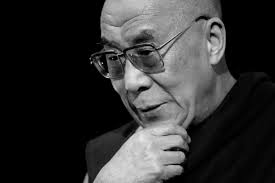
THE DALAI LAMA ON THE INTERDEPENDENCE OF HUMANITY

download (19)Our prime purpose in this life is to help others. And if you can't help them, at least don't hurt them.
From the moment of birth, every human being wants happiness and does not want suffering. From the very core of our being, we simply desire contentment. I don't know whether the universe, with its countless galaxies, stars and planets, has a deeper meaning or not, but at the very least, it is clear that we humans who live on this earth face the task of making a happy life for ourselves.
From my own limited experience I have found that the greatest degree of inner tranquility comes from the development of love and compassion.
Ultimately, the reason why love and compassion bring the greatest happiness is simply that our nature cherishes them above all else. The need for love lies at the very foundation of human existence. It results from the profound interdependence we all share with one another.
Inter-dependence, of course, is a fundamental law of nature. Not only higher forms of life but also many of the smallest insects are social beings who, without any religion, law or education, survive by mutual cooperation based on an innate recognition of their interconnectedness.
It is because our own human existence is so dependent on the help of others that our need for love lies at the very foundation of our existence. Therefore we need a genuine sense of responsibility and a sincere concern for the welfare of others.
However capable and skillful an individual may be, left alone, he or she will not survive. However vigorous and independent one may feel during the most prosperous periods of life, when one is sick or very young or very old, one must depend on the support of others.
The more we care for the happiness of others, the greater our own sense of well-being becomes. Cultivating a close, warm-hearted feeling for others automatically puts the mind at ease. This helps remove whatever fears or insecurities we may have and gives us the strength to cope with any obstacles we encounter. It is the ultimate source of success in life.
- Dalai Lama

AYN RAND ON THE MORALITY OF SELF INTEREST 

The basic principle of altruism is that man has no right to exist for his own sake, that service to others is the only justification of his existence, and that self-sacrifice is his highest moral duty, virtue and value.
My views on charity are very simple. I do not consider it a major virtue and, above all, I do not consider it a moral duty. There is nothing wrong in helping other people, if and when they are worthy of the help and you can afford to help them. I regard charity as a marginal issue. What I am fighting is the idea that charity is a moral duty and a primary virtue.
Do not confuse altruism with kindness, good will or respect for the rights of others. These are not primaries, but consequences, which, in fact, altruism makes impossible. The irreducible primary of altruism, the basic absolute, is self-sacrifice—which means; self-immolation, self-abnegation, self-denial, self-destruction—which means: the self as a standard of evil, the selfless as a standard of the good.
Do not hide behind such superficialities as whether you should or should not give a dime to a beggar. That is not the issue. The issue is whether you do or do not have the right to exist without giving him that dime. The issue is whether you must keep buying your life, dime by dime, from any beggar who might choose to approach you. The issue is whether the need of others is the first mortgage on your life and the moral purpose of your existence. The issue is whether man is to be regarded as a sacrificial animal.
It is altruism that has corrupted and perverted human benevolence by regarding the giver as an object of immolation, and the receiver as a helplessly miserable object of pity who holds a mortgage on the lives of others—a doctrine which is extremely offensive to both parties, leaving men no choice but the roles of sacrificial victim or moral cannibal.
Even though altruism declares that “it is more blessed to give than to receive,” it does not work that way in practice. The givers are never blessed; the more they give, the more is demanded of them; complaints, reproaches and insults are the only response they get for practicing altruism’s virtues (or for their actual virtues). Altruism cannot permit a recognition of virtue; it cannot permit self-esteem or moral innocence. Guilt is altruism’s stock in trade, and the inducing of guilt is its only means of self-perpetuation. If the giver is not kept under a torrent of degrading, demeaning accusations, he might take a look around and put an end to the self-sacrificing. Altruists are concerned only with those who suffer—not with those who provide relief from suffering, not even enough to care whether they are able to survive. When no actual suffering can be found, the altruists are compelled to invent or manufacture it.
Such is the secret core of your creed, the other half of your double standard: it is immoral to live by your own effort, but moral to live by the effort of others—it is immoral to consume your own product, but moral to consume the products of others—it is immoral to earn, but moral to mooch—it is the parasites who are the moral justification for the existence of the producers, but the existence of the parasites is an end in itself—it is evil to profit by achievement, but good to profit by sacrifice—it is evil to create your own happiness, but good to enjoy it at the price of the blood of others.
- Ayn Rand

MY THOUGHTS ON THE MATTER

admin-ajax-ConvertImageI tend to embrace the Dalai Lama's message of mutual cooperation over the Objectivist appeal to uninhibited self-interest. My personal moral imperative would be that, so much as it is within our personal control, our primary purpose in life should be to seek mutually beneficial social and economic arrangements.
The Dalai Lama's assertion that our own human existence is dependent on the help of others is undeniable. Most intellectually honest individuals recognize that any assertion of sole-sufficiency is over-exaggerated and that success, or failure, is highly dependent on the cooperation of others. I believe It takes a tremendous amount of self-deception for anyone to believe that no one else deserves credit for the cultivation of their virtue and talent or the potential success of their ventures. No individual has ever reached the age of self-sufficiency without a caretaker or become educated in how to navigate the waters of society without a mentor. And nobody has ever engaged in a successful enterprise without the cooperation of those whom have either granted them an opportunity, or tirelessly labored for their cause.
As for altruism, I believe that if there is a legitimate need, and you have the ability to alleviate another's pain and suffering, then you should provide what charity you can afford. Charity is a mercy shown to another premised on the mutual experience and understanding, that at one point in our lives, our own well-being was dependent on the kindness or goodwill of another. On a societal level, it is simply sowing the seeds of compassion with the hope, but not the expectation, that if you or a loved one ever fall on misfortune, someone will return the kindness. It should be a voluntary act of compassion without judgment.
As Rand contends, this does not mean that individual acts of charity should be involuntarily imposed. If you feel put out or taken advantage of, you should not give a cruel gift. It would be a kinder act not to give at all than to berate or dehumanize another human being for having a need. If given the choice, I do not believe that the vast majority of humanity would ever voluntarily choose the subjugated status of dependence over the independence and self dignity that self-sufficiency provides.
[embed]https://www.youtube.com/watch?v=XoTx7Rt4dig[/embed]
In terms of societal well-being, Rand's portrayal of altruism as a social harm stands on less solid ground. The moral impetus behind altruism is the ethic of reciprocity: you should treat others as you wish to be treated. To make her appeal to self interest more palatable, Rand prefers to attack the maxim that it is better to give than receive, on the grounds that it promotes "self-sacrifice—which means; self-immolation, self-abnegation, self-denial, self-destruction."  By framing the argument in this way, Rand avoids the more repugnant task of having to question the moral sufficiency of the precept that each member of a society is required to provide the same level of respect and common dignity which they presume for themselves.
My main criticism of Objectivism is that, more often than not, it is employed as an oversimplified moral justification for rationalizing away the negative externalities caused by a dominant class's social and economic interactions with the more vulnerable class. On the macro level, the self sacrifice demanded by Altruism is more aptly characterized as political compromise. It represents the the voluntary repudiation of an individual claim on wealth in exchange for a benefit or security which the existing social arrangement provides.
The moral deficiency of an egocentric society is in the claim that the individual duty to ensure the equitable treatment of its less fortunate members only extends so far as the transaction does not personally inconvenience an individual's life. This is a very debilitating policy, insofar as it undermines the very existence of any express or implied social agreement amongst members of society to engage in mutual cooperation or to cultivate a common respect for one another. What develops is a highly militaristic attitude against individuals who seek a more equitable distribution of material resources. Reforms are challenged as a threat to one's social status and competition is perceived as an adversary to be overcome, rather than a mutual entitlement to seek financial independence.
Moreover, the rationale that individual acts of charity should be voluntary does not easily translate into the moral proposition that society has no collective duty to provide an economic safety net for its most vulnerable citizens. In any civilized nation, there should sensibly be a preferential option for assisting the poor and disenfranchised. Subsidizing existing wealth at the expense of society's less fortunate individuals tends to promote instability and crisis. A society which cruelly neglects its most vulnerable members invites violence upon its own head, whether it manifests itself in the form of rising crime rates or seditious revolution. Thus, a society which shows deliberate indifference towards a persecuted segment of its own population has no reasonable expectation of domestic tranquility.
The less a society strives for Egalitarian ideals, the more turbulent the political climate becomes. A segment of the population which is economically exploited by the existing social arrangements is not morally bound to suffer in silence. To do so would be an irrational act of preserving one's own undignified state of existence. The calculated choice to peacefully redress one's grievances is a magnanimous act designed to bring attention to an injustice in the hope of invoking Society's notions of equity and fair play. However, once an affected population's faith in peaceful reform is extinguished by the dominant society's refusal to redress their social grievances, violence is embraced as a justifiable and necessary act to ensure one's own self-determination. As former president John F. Kennedy warned, "Those who make peaceful revolution impossible will make violent revolution inevitable." This model of economic tyranny being met with violent insurrection has unfailingly repeated itself throughout the course of human history. As such, no society should ever rationally encourage domestic insurgency through deliberate indifference or institutionalized cruelty.
The preservation of a civil society ultimately rests upon its maintaining an acceptable level of altruism. The competing claims made by interdependence and individuality can only be reconciled through a self-imposed moral restraint which permits members of society the freedom to determine the course of their own lives, while ensuring they do not violate the personal autonomy or self-dignity of others in the process. Objectivism undermines this civic ethic with its abolition of a moral duty to protect the most vulnerable members of society. As a result, it inflicts a greater social injustice than it initially sets out to correct. 
Lawrence Christopher Skufca (2015)

The Gadfly Syndrome: The Socratic Tension Between the Good Individual and the Good Citizen


In the Apology, Socrates describes himself as a “gadfly” cast upon the city of Athens to awaken it from its slumber.[1] Herein lies the tension between the individual and the social aspect of the philosopher – the act of existing as both a good human being and a good citizen. For Socrates, the “unexamined life is not worth living,” [2] therefore it is the duty of every individual to engage in the search for the truths about society and one’s self. However, the individual’s duty to self-discovery is reliant upon his interaction with the city. Unfortunately, it is precisely this activity which makes the philosopher a nuisance to the public good. His inquiries subject the city to repeated offense, as the philosopher continuously questions the moral foundations upon which the city gains its legitimacy. The contradictions that are presented serve as a constant reminder of the city’s own self-deficiency. Thus, the gadfly eventually gets swatted.
This is the paradox presented by the lifestyle advocated by Socrates. The human being and the citizen have a mutual claim on the philosopher’s life. Like a bad marriage, they can’t seem to live with each other, nor can they seem to live without one other, but are simply forced to coexist in a conflicting state of mutual necessity. The two are perpetually at odds with one other due to their separate allegiances; the one to philosophy and the other to the city. This is the dilemma I hope to resolve. In doing so I will look to several texts to examine (1) the solitary life of the philosopher and its claim on the human being, (2) the social life of the citizen and his responsibility towards the city, and (3) the conflict between the philosopher’s two natures.
INDIVIDUAL SELF-AWARENESS
One aspect of the philosophical life is its radical call to forsake the material comforts of home, family, and wealth in pursuit of the truth. In the Symposium, Socrates describes the life of the philosopher through his portrayal of Eros: “First of all, he is always poor; and he is far from being tender and beautiful, as the many believe, but is tough, squalid, shoeless, and homeless … always dwelling with neediness … Eros is — necessarily — a philosopher.”[3] Much like Eros, Socrates has chosen to be “careless” for his own things by accepting a life of poverty.”[4] Although the Socratic depiction of Eros seems to contain an element of self-reflection, it also serves as a metaphor for the self-discipline required to live a truly philosophic existence.
The philosopher, first and foremost, is the individual who is a “skilled hunter”[5] in recognizing the truth through the correct governance of his soul.[6] Socrates’ Myth of the Soul in Phaedrus, gives us an ample word picture of the soul, and how the philosopher directs it. The soul is likened to a “natural union of a team of winged horses and their charioteer.”[7] The charioteer is in charge of two horses; a white one of good stock (the spirited part of the soul), and a black one of bad stock (the desirous part of the soul). The driver, or ruling part of the soul,[8] is responsible for steering the chariot (soul) clearly, although the two horses pull the chariot in different directions. On Socrates’ account, this makes “chariot driving … a painfully difficult business.”[9] The success of the chariot driver rests on his ability to guide the two horses to catch a glimpse of the transcendent forms of the truths, “visible only to intelligence.”[10]
The ruling part of the soul must gain control over the spirited and desirous part of the soul if it is to keep from being prejudiced by their competing passions. As Socrates notes, it is the desirous part of the soul which is the most difficult to conquer: “The heaviness of the bad horse drags its charioteer towards the earth [away from the truth] and weighs him down if he has failed to train it well, and this causes the most extreme toil and trouble the soul will face.”[11] Thus, the more control the philosopher has over his passions, the more truth he is permitted to see.
The individual who is unable to subdue his passions can never truly achieve the status of a good human being:
A soul that never saw the truth cannot take a human shape, since a human being must understand speech in terms of general forms, proceeding to bring many perceptions together into a reasoned unity. That process is a recollection of the things our soul saw … when it disregarded the things we now call real and lifted up its head to what is truly real instead.[12]
The soul can never be led to true understanding if the ruling part lacks authority over the soul; the discovery of true knowledge is ultimately found by recollecting those eternal, permanent truths that are only perceivable through disciplined thought. No matter how skillful the chariot driver, however, the soul needs dialogue with the city; for “all the great arts require endless talk and ethereal speculation about nature.”[13]
THE CIVIC LIFE OF THE INDIVIDUAL
The philosopher exists on the continuum between “being wise and being without understanding.” As a result, he can never use himself as the sole standard for truth. After the Oracle at Delphi prophesies there is no one wiser than Socrates, the philosopher’s first impulse is to measure his knowledge by speaking to those in the city who are “reputed to be wise.”[14] Socrates discovers that “those with the best reputations” seem to be the “most deficient,” while those with lesser reputations seem “to be men more fit in being prudent.”[15] He accredits this to the fact that because each “performed his art nobly, each one deemed himself wisest also in the other things, the greatest things.”[16] Therefore Socrates recognizes his wisdom to be the realization of his own ignorance: “for probably neither of us knows anything noble and good, but he supposes he knows something when he does not know, while I … do not even suppose that I do.”[17]
Dialogue is a way of conditioning the receptivity of the soul towards learning: “the rhetorical art, taken as a whole, [being] a way of directing the soul by means of speech.”[18] It is the virtue of speaking the truth,[19] for the person who speaks “well and nobly” must understand the reality of what he speaks of.[20] This form of artful speaking forces the orator to engage in the activity of philosophy by carefully examining the nature of the things he speaks about. It is a systematic art of “divisions and collections”[21] by which to differentiate and categorize things as to gain a fuller understanding into their nature.
Thus, Socratic dialogue becomes a method for transmitting knowledge,[22] enabling the philosopher to lead himself, and others to knowledge by directing souls[23] through the process of recollection. The Meno slave narrative provides a vivid example of how the process of recollection operates. The conversation with Meno’s slave takes on the form of a cross-examination by which he is skillfully led to distinguish a recognizable form of truth. Without any prior knowledge of geometry, Socrates directs the slave to acknowledge a simple geometrical reality through a series of leading questions. Socrates goes on to explain that “the truth about the beings is always present for us in the soul.”[24]
Simple truths, such as mathematical proofs, serve as a springboard in the dialectical education for grasping the recognizable form of the truth through the mind’s eye: “whoever has been educated up to this point in erotics, beholding successively and correctly the beautiful things, in now going to the perfect end of erotics shall suddenly glimpse something beautiful in its nature.”[25] The dialectician can only lead the student towards the answer to these truths; he can never directly provide the solution. This serves a twofold purpose, 1.) for the student to fully recognize the truth, he must take the final dialectical leap himself, and 2.) it provides confirmation to the philosopher of the existence of the truth.
THE CONFLICT BETWEEN THE INDIVIDUAL’S TWO NATURES
The citizen is dependent on the city for his physical and intellectual well-being. The city nurtures, educates and protects its citizens from birth through death via its laws and social institutions. [26] This is the duty of the city; its legitimacy depends on the good that it claims to provide its citizens, that of justice executed through the law. In exchange for the city’s protection, the citizen enters into a willing covenant to preserve the laws of the city through his obedience. This is the duty of the good citizen. In Crito, Athens makes a claim on Socrates’ life; his obedience to its laws in exchange for the good it provides. So long as Socrates chooses to remain in the city, he has willingly consented to this arrangement. [27]. Nevertheless, while the city may own the philosopher’s body, it cannot own his soul.
The allegiance of the good human being is to the protection of the soul through philosophic activity. A tension develops between the human being’s obligation to truth and the citizen’s duty to the law. Philosophical intercourse within the city will ultimately challenge the city’s integrity by inquiring into the basis of its laws. This eventually places both, the philosopher and the city in jeopardy: “For there is no human being who will preserve his life if he genuinely opposes … [the] multitude.” [28]. Anytus reminds Socrates of how “very easy” it is to be harmed for speaking against the city, when he objects to Socrates examination of the esteemed fathers of Athens. [29]. Therefore, the philosopher must protect himself and the city by engaging in private, rather than public dialogue.
The skilled lawgiver must recognize the correct application of the truth. The problem with Athens is that it has fallen asleep, thus lacks the necessary self-awareness to distinguish justice from immorality. Socrates contends that for the law to be viewed as legitimate, it must be universally accepted as noble:
“Noble things, it would seem, are everywhere considered noble, and base things base; not base things noble or noble things base … And thus, as a universal rule, realities, not unrealities are accepted as real, both among us and all other men.” [30].
This forms the basis of the Socratic notion of the law’s responsibility to truth. Only when the good is applied can the law and justice coexist.
CONCLUSION
What the city fails to realize is that it has a need for the philosopher. In order to maintain its legitimate claim to authority, the City’s laws must provide a benefit to the citizen. For the laws to provide a benefit they must be founded on truth. The ancient standards of law based on prophecy, tradition and the opinion of the many contain contradictions that incessantly leave them open to question, making them detrimental to the city’s continued existence. Once corrupted by bad governance, the City loses its legitimate claim of authority over the citizen.
The skill of lawmaking is to apply the good which benefits the citizen. Socrates duty as a citizen requires him to become the “gadfly” which alerts Athens of the deficiencies which would undermine respect for its laws. His duty as a philosopher requires him to prod lawmakers into gaining control over their passions and correctly assess the Good. By doing so, Socrates’ is able to find consistency between his obligations of being a good citizen and a good human being. He becomes a useful nuisance to the City through his constant diagnosis of the social ills which threaten its health.
By Lawrence Christopher Skufca (2008)
Some Rights Reserved
 (Cover Art: Ezra Pound‘s “Gadfly” Signature)

Bibliography

[1] Plato. Apology of Socrates. “4 Texts on Socrates.” Trans Thomas G. and Starry West (Ithaca, NY: Cornell Univ. Press, 1984); 31a.
[2] Ibid.; 38a.
[3] Plato. Symposium. Trans Seth Benardette. (Chicago, Il: Chicago Univ. Press); 203d-204b.
[4] Plato. Apology of Socrates. “4 Texts on Socrates.” Trans Thomas G. and Starry West (Ithaca, NY: Cornell Univ. Press, 1984); 31b,31c.
[5] Plato. Symposium. Trans Seth Benardette. (Chicago, Il: Chicago Univ. Press); 203e.
[6] Plato. The Republic. Trans Alan Bloom. (New York, NY: Basic Books, Inc., 1968); 591b.
[7] Plato. Phaedrus. Trans. Alexander Nehamas and Paul Woodruff. (Indianapolis, IN: Hackett Publishing, 1995); 246b.
[8] see footnote 69, p. 31, Phaedrus.
[9] Plato. Phaedrus. Trans. Alexander Nehamas and Paul Woodruff. (Indianapolis, IN: Hackett Publishing, 1995); 246b.
[10] Ibid.; 247c,d.
[11] Ibid.; 247b.
[12] Ibid.; 249c.
[13] Ibid.; 270a.
[14] Plato. Apology of Socrates. “4 Texts on Socrates.” Trans Thomas G. and Starry West (Ithaca, NY: Cornell Univ. Press, 1984); 20c.
[15] Ibid.; 22a.
[16] Ibid.; 22e.
[17] Ibid.; 21d.
[18] Plato. Phaedrus. Trans. Alexander Nehamas and Paul Woodruff. (Indianapolis, IN: Hackett Publishing, 1995); 261a.
[19] Plato. Apology of Socrates. “4 Texts on Socrates.” Trans Thomas G. and Starry West (Ithaca, NY: Cornell Univ. Press, 1984); 18a.
[20] Plato. Phaedrus. Trans. Alexander Nehamas and Paul Woodruff. (Indianapolis, IN: Hackett Publishing, 1995); 261a.
[21] Ibid.; 266b.
[22] Ibid.; 270d.
[23] Ibid.; 271d.
[24] Plato. Meno. “Protagoras and Meno.” Trans. Robert C. Bartlett. (Ithaca, NY: Cornell Univ. Press, 2004); 86b.
[25] Plato. Symposium. Trans Seth Benardette. (Chicago, Il: Chicago Univ. Press); 211a.
[26] Plato. Crito. “4 texts on Socrates.” Trans Thomas G. and Starry West (Ithaca, NY: Cornell Univ. Press, 1984); 51d.
[27] Ibid.; 51e.
[28] Plato. Apology of Socrates. “4 Texts on Socrates.” Trans Thomas G. and Starry West (Ithaca, NY: Cornell Univ. Press, 1984); 32a.
[29] Plato. Meno. “Protagoras and Meno.” Trans. Robert C. Bartlett. (Ithaca, NY: Cornell Univ. Press, 2004); 94e.
[30] Plato. Minos. The Annenberg/CPB Project. (Internet:www.perseus.tufts.edu, 2008); 316b.