Showing posts with label On Morality and Ethics. Show all posts

Friday, August 14, 2015

Maladjusted


"Modern Psychology has a word that is probably used more than any other word in Psychology. It is the word maladjusted. It is the ringing cry of modern child psychology --- maladjusted. Now of course we all want to live the well adjusted life in order to avoid neurotic and schizophrenic personalities. But as I move toward my conclusion, I would like to say to you today, in a very honest manner, there's some things in our society, and some things in our world, for which I am proud to be maladjusted. And I call upon all men of good will to be maladjusted to these things until the Good Society is realized.

I must honestly say to you that I never intend to adjust myself to racial segregation and discrimination. I never intend to adjust myself to religious bigotry. I never intend to adjust myself to economic conditions that will take necessities from the many to give luxuries to the few and leave millions of God's children smothering in an airtight cage of poverty in the midst of an affluent society."

- Martin Luther King, Jr.

Speech at Western Michigan University, December 18, 1963


Altruism vs. Objectivism: Which Moral Imperative Better Promotes Mutual Cooperation and Common Respect in a Civil Society?


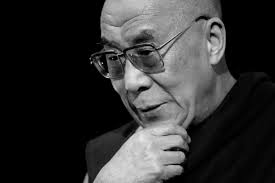
THE DALAI LAMA ON THE INTERDEPENDENCE OF HUMANITY

download (19)Our prime purpose in this life is to help others. And if you can't help them, at least don't hurt them.
From the moment of birth, every human being wants happiness and does not want suffering. From the very core of our being, we simply desire contentment. I don't know whether the universe, with its countless galaxies, stars and planets, has a deeper meaning or not, but at the very least, it is clear that we humans who live on this earth face the task of making a happy life for ourselves.
From my own limited experience I have found that the greatest degree of inner tranquility comes from the development of love and compassion.
Ultimately, the reason why love and compassion bring the greatest happiness is simply that our nature cherishes them above all else. The need for love lies at the very foundation of human existence. It results from the profound interdependence we all share with one another.
Inter-dependence, of course, is a fundamental law of nature. Not only higher forms of life but also many of the smallest insects are social beings who, without any religion, law or education, survive by mutual cooperation based on an innate recognition of their interconnectedness.
It is because our own human existence is so dependent on the help of others that our need for love lies at the very foundation of our existence. Therefore we need a genuine sense of responsibility and a sincere concern for the welfare of others.
However capable and skillful an individual may be, left alone, he or she will not survive. However vigorous and independent one may feel during the most prosperous periods of life, when one is sick or very young or very old, one must depend on the support of others.
The more we care for the happiness of others, the greater our own sense of well-being becomes. Cultivating a close, warm-hearted feeling for others automatically puts the mind at ease. This helps remove whatever fears or insecurities we may have and gives us the strength to cope with any obstacles we encounter. It is the ultimate source of success in life.
- Dalai Lama

AYN RAND ON THE MORALITY OF SELF INTEREST 

The basic principle of altruism is that man has no right to exist for his own sake, that service to others is the only justification of his existence, and that self-sacrifice is his highest moral duty, virtue and value.
My views on charity are very simple. I do not consider it a major virtue and, above all, I do not consider it a moral duty. There is nothing wrong in helping other people, if and when they are worthy of the help and you can afford to help them. I regard charity as a marginal issue. What I am fighting is the idea that charity is a moral duty and a primary virtue.
Do not confuse altruism with kindness, good will or respect for the rights of others. These are not primaries, but consequences, which, in fact, altruism makes impossible. The irreducible primary of altruism, the basic absolute, is self-sacrifice—which means; self-immolation, self-abnegation, self-denial, self-destruction—which means: the self as a standard of evil, the selfless as a standard of the good.
Do not hide behind such superficialities as whether you should or should not give a dime to a beggar. That is not the issue. The issue is whether you do or do not have the right to exist without giving him that dime. The issue is whether you must keep buying your life, dime by dime, from any beggar who might choose to approach you. The issue is whether the need of others is the first mortgage on your life and the moral purpose of your existence. The issue is whether man is to be regarded as a sacrificial animal.
It is altruism that has corrupted and perverted human benevolence by regarding the giver as an object of immolation, and the receiver as a helplessly miserable object of pity who holds a mortgage on the lives of others—a doctrine which is extremely offensive to both parties, leaving men no choice but the roles of sacrificial victim or moral cannibal.
Even though altruism declares that “it is more blessed to give than to receive,” it does not work that way in practice. The givers are never blessed; the more they give, the more is demanded of them; complaints, reproaches and insults are the only response they get for practicing altruism’s virtues (or for their actual virtues). Altruism cannot permit a recognition of virtue; it cannot permit self-esteem or moral innocence. Guilt is altruism’s stock in trade, and the inducing of guilt is its only means of self-perpetuation. If the giver is not kept under a torrent of degrading, demeaning accusations, he might take a look around and put an end to the self-sacrificing. Altruists are concerned only with those who suffer—not with those who provide relief from suffering, not even enough to care whether they are able to survive. When no actual suffering can be found, the altruists are compelled to invent or manufacture it.
Such is the secret core of your creed, the other half of your double standard: it is immoral to live by your own effort, but moral to live by the effort of others—it is immoral to consume your own product, but moral to consume the products of others—it is immoral to earn, but moral to mooch—it is the parasites who are the moral justification for the existence of the producers, but the existence of the parasites is an end in itself—it is evil to profit by achievement, but good to profit by sacrifice—it is evil to create your own happiness, but good to enjoy it at the price of the blood of others.
- Ayn Rand

MY THOUGHTS ON THE MATTER

admin-ajax-ConvertImageI tend to embrace the Dalai Lama's message of mutual cooperation over the Objectivist appeal to uninhibited self-interest. My personal moral imperative would be that, so much as it is within our personal control, our primary purpose in life should be to seek mutually beneficial social and economic arrangements.
The Dalai Lama's assertion that our own human existence is dependent on the help of others is undeniable. Most intellectually honest individuals recognize that any assertion of sole-sufficiency is over-exaggerated and that success, or failure, is highly dependent on the cooperation of others. I believe It takes a tremendous amount of self-deception for anyone to believe that no one else deserves credit for the cultivation of their virtue and talent or the potential success of their ventures. No individual has ever reached the age of self-sufficiency without a caretaker or become educated in how to navigate the waters of society without a mentor. And nobody has ever engaged in a successful enterprise without the cooperation of those whom have either granted them an opportunity, or tirelessly labored for their cause.
As for altruism, I believe that if there is a legitimate need, and you have the ability to alleviate another's pain and suffering, then you should provide what charity you can afford. Charity is a mercy shown to another premised on the mutual experience and understanding, that at one point in our lives, our own well-being was dependent on the kindness or goodwill of another. On a societal level, it is simply sowing the seeds of compassion with the hope, but not the expectation, that if you or a loved one ever fall on misfortune, someone will return the kindness. It should be a voluntary act of compassion without judgment.
As Rand contends, this does not mean that individual acts of charity should be involuntarily imposed. If you feel put out or taken advantage of, you should not give a cruel gift. It would be a kinder act not to give at all than to berate or dehumanize another human being for having a need. If given the choice, I do not believe that the vast majority of humanity would ever voluntarily choose the subjugated status of dependence over the independence and self dignity that self-sufficiency provides.
[embed]https://www.youtube.com/watch?v=XoTx7Rt4dig[/embed]
In terms of societal well-being, Rand's portrayal of altruism as a social harm stands on less solid ground. The moral impetus behind altruism is the ethic of reciprocity: you should treat others as you wish to be treated. To make her appeal to self interest more palatable, Rand prefers to attack the maxim that it is better to give than receive, on the grounds that it promotes "self-sacrifice—which means; self-immolation, self-abnegation, self-denial, self-destruction."  By framing the argument in this way, Rand avoids the more repugnant task of having to question the moral sufficiency of the precept that each member of a society is required to provide the same level of respect and common dignity which they presume for themselves.
My main criticism of Objectivism is that, more often than not, it is employed as an oversimplified moral justification for rationalizing away the negative externalities caused by a dominant class's social and economic interactions with the more vulnerable class. On the macro level, the self sacrifice demanded by Altruism is more aptly characterized as political compromise. It represents the the voluntary repudiation of an individual claim on wealth in exchange for a benefit or security which the existing social arrangement provides.
The moral deficiency of an egocentric society is in the claim that the individual duty to ensure the equitable treatment of its less fortunate members only extends so far as the transaction does not personally inconvenience an individual's life. This is a very debilitating policy, insofar as it undermines the very existence of any express or implied social agreement amongst members of society to engage in mutual cooperation or to cultivate a common respect for one another. What develops is a highly militaristic attitude against individuals who seek a more equitable distribution of material resources. Reforms are challenged as a threat to one's social status and competition is perceived as an adversary to be overcome, rather than a mutual entitlement to seek financial independence.
Moreover, the rationale that individual acts of charity should be voluntary does not easily translate into the moral proposition that society has no collective duty to provide an economic safety net for its most vulnerable citizens. In any civilized nation, there should sensibly be a preferential option for assisting the poor and disenfranchised. Subsidizing existing wealth at the expense of society's less fortunate individuals tends to promote instability and crisis. A society which cruelly neglects its most vulnerable members invites violence upon its own head, whether it manifests itself in the form of rising crime rates or seditious revolution. Thus, a society which shows deliberate indifference towards a persecuted segment of its own population has no reasonable expectation of domestic tranquility.
The less a society strives for Egalitarian ideals, the more turbulent the political climate becomes. A segment of the population which is economically exploited by the existing social arrangements is not morally bound to suffer in silence. To do so would be an irrational act of preserving one's own undignified state of existence. The calculated choice to peacefully redress one's grievances is a magnanimous act designed to bring attention to an injustice in the hope of invoking Society's notions of equity and fair play. However, once an affected population's faith in peaceful reform is extinguished by the dominant society's refusal to redress their social grievances, violence is embraced as a justifiable and necessary act to ensure one's own self-determination. As former president John F. Kennedy warned, "Those who make peaceful revolution impossible will make violent revolution inevitable." This model of economic tyranny being met with violent insurrection has unfailingly repeated itself throughout the course of human history. As such, no society should ever rationally encourage domestic insurgency through deliberate indifference or institutionalized cruelty.
The preservation of a civil society ultimately rests upon its maintaining an acceptable level of altruism. The competing claims made by interdependence and individuality can only be reconciled through a self-imposed moral restraint which permits members of society the freedom to determine the course of their own lives, while ensuring they do not violate the personal autonomy or self-dignity of others in the process. Objectivism undermines this civic ethic with its abolition of a moral duty to protect the most vulnerable members of society. As a result, it inflicts a greater social injustice than it initially sets out to correct
Lawrence Christopher Skufca (2015)

The Gadfly Syndrome: The Socratic Tension Between the Good Individual and the Good Citizen


In the Apology, Socrates describes himself as a “gadfly” cast upon the city of Athens to awaken it from its slumber.[1] Herein lies the tension between the individual and the social aspect of the philosopher – the act of existing as both a good human being and a good citizen. For Socrates, the “unexamined life is not worth living,” [2] therefore it is the duty of every individual to engage in the search for the truths about society and one’s self. However, the individual’s duty to self-discovery is reliant upon his interaction with the city. Unfortunately, it is precisely this activity which makes the philosopher a nuisance to the public good. His inquiries subject the city to repeated offense, as the philosopher continuously questions the moral foundations upon which the city gains its legitimacy. The contradictions that are presented serve as a constant reminder of the city’s own self-deficiency. Thus, the gadfly eventually gets swatted.
This is the paradox presented by the lifestyle advocated by Socrates. The human being and the citizen have a mutual claim on the philosopher’s life. Like a bad marriage, they can’t seem to live with each other, nor can they seem to live without one other, but are simply forced to coexist in a conflicting state of mutual necessity. The two are perpetually at odds with one other due to their separate allegiances; the one to philosophy and the other to the city. This is the dilemma I hope to resolve. In doing so I will look to several texts to examine (1) the solitary life of the philosopher and its claim on the human being, (2) the social life of the citizen and his responsibility towards the city, and (3) the conflict between the philosopher’s two natures.
INDIVIDUAL SELF-AWARENESS
One aspect of the philosophical life is its radical call to forsake the material comforts of home, family, and wealth in pursuit of the truth. In the Symposium, Socrates describes the life of the philosopher through his portrayal of Eros: “First of all, he is always poor; and he is far from being tender and beautiful, as the many believe, but is tough, squalid, shoeless, and homeless … always dwelling with neediness … Eros is — necessarily — a philosopher.”[3] Much like Eros, Socrates has chosen to be “careless” for his own things by accepting a life of poverty.”[4] Although the Socratic depiction of Eros seems to contain an element of self-reflection, it also serves as a metaphor for the self-discipline required to live a truly philosophic existence.
The philosopher, first and foremost, is the individual who is a “skilled hunter”[5] in recognizing the truth through the correct governance of his soul.[6] Socrates’ Myth of the Soul in Phaedrus, gives us an ample word picture of the soul, and how the philosopher directs it. The soul is likened to a “natural union of a team of winged horses and their charioteer.”[7] The charioteer is in charge of two horses; a white one of good stock (the spirited part of the soul), and a black one of bad stock (the desirous part of the soul). The driver, or ruling part of the soul,[8] is responsible for steering the chariot (soul) clearly, although the two horses pull the chariot in different directions. On Socrates’ account, this makes “chariot driving … a painfully difficult business.”[9] The success of the chariot driver rests on his ability to guide the two horses to catch a glimpse of the transcendent forms of the truths, “visible only to intelligence.”[10]
The ruling part of the soul must gain control over the spirited and desirous part of the soul if it is to keep from being prejudiced by their competing passions. As Socrates notes, it is the desirous part of the soul which is the most difficult to conquer: “The heaviness of the bad horse drags its charioteer towards the earth [away from the truth] and weighs him down if he has failed to train it well, and this causes the most extreme toil and trouble the soul will face.”[11] Thus, the more control the philosopher has over his passions, the more truth he is permitted to see.
The individual who is unable to subdue his passions can never truly achieve the status of a good human being:
A soul that never saw the truth cannot take a human shape, since a human being must understand speech in terms of general forms, proceeding to bring many perceptions together into a reasoned unity. That process is a recollection of the things our soul saw … when it disregarded the things we now call real and lifted up its head to what is truly real instead.[12]
The soul can never be led to true understanding if the ruling part lacks authority over the soul; the discovery of true knowledge is ultimately found by recollecting those eternal, permanent truths that are only perceivable through disciplined thought. No matter how skillful the chariot driver, however, the soul needs dialogue with the city; for “all the great arts require endless talk and ethereal speculation about nature.”[13]
THE CIVIC LIFE OF THE INDIVIDUAL
The philosopher exists on the continuum between “being wise and being without understanding.” As a result, he can never use himself as the sole standard for truth. After the Oracle at Delphi prophesies there is no one wiser than Socrates, the philosopher’s first impulse is to measure his knowledge by speaking to those in the city who are “reputed to be wise.”[14] Socrates discovers that “those with the best reputations” seem to be the “most deficient,” while those with lesser reputations seem “to be men more fit in being prudent.”[15] He accredits this to the fact that because each “performed his art nobly, each one deemed himself wisest also in the other things, the greatest things.”[16] Therefore Socrates recognizes his wisdom to be the realization of his own ignorance: “for probably neither of us knows anything noble and good, but he supposes he knows something when he does not know, while I … do not even suppose that I do.”[17]
Dialogue is a way of conditioning the receptivity of the soul towards learning: “the rhetorical art, taken as a whole, [being] a way of directing the soul by means of speech.”[18] It is the virtue of speaking the truth,[19] for the person who speaks “well and nobly” must understand the reality of what he speaks of.[20] This form of artful speaking forces the orator to engage in the activity of philosophy by carefully examining the nature of the things he speaks about. It is a systematic art of “divisions and collections”[21] by which to differentiate and categorize things as to gain a fuller understanding into their nature.
Thus, Socratic dialogue becomes a method for transmitting knowledge,[22] enabling the philosopher to lead himself, and others to knowledge by directing souls[23] through the process of recollection. The Meno slave narrative provides a vivid example of how the process of recollection operates. The conversation with Meno’s slave takes on the form of a cross-examination by which he is skillfully led to distinguish a recognizable form of truth. Without any prior knowledge of geometry, Socrates directs the slave to acknowledge a simple geometrical reality through a series of leading questions. Socrates goes on to explain that “the truth about the beings is always present for us in the soul.”[24]
Simple truths, such as mathematical proofs, serve as a springboard in the dialectical education for grasping the recognizable form of the truth through the mind’s eye: “whoever has been educated up to this point in erotics, beholding successively and correctly the beautiful things, in now going to the perfect end of erotics shall suddenly glimpse something beautiful in its nature.”[25] The dialectician can only lead the student towards the answer to these truths; he can never directly provide the solution. This serves a twofold purpose, 1.) for the student to fully recognize the truth, he must take the final dialectical leap himself, and 2.) it provides confirmation to the philosopher of the existence of the truth.
THE CONFLICT BETWEEN THE INDIVIDUAL’S TWO NATURES
The citizen is dependent on the city for his physical and intellectual well-being. The city nurtures, educates and protects its citizens from birth through death via its laws and social institutions. [26] This is the duty of the city; its legitimacy depends on the good that it claims to provide its citizens, that of justice executed through the law. In exchange for the city’s protection, the citizen enters into a willing covenant to preserve the laws of the city through his obedience. This is the duty of the good citizen. In Crito, Athens makes a claim on Socrates’ life; his obedience to its laws in exchange for the good it provides. So long as Socrates chooses to remain in the city, he has willingly consented to this arrangement. [27]. Nevertheless, while the city may own the philosopher’s body, it cannot own his soul.
The allegiance of the good human being is to the protection of the soul through philosophic activity. A tension develops between the human being’s obligation to truth and the citizen’s duty to the law. Philosophical intercourse within the city will ultimately challenge the city’s integrity by inquiring into the basis of its laws. This eventually places both, the philosopher and the city in jeopardy: “For there is no human being who will preserve his life if he genuinely opposes … [the] multitude.” [28]. Anytus reminds Socrates of how “very easy” it is to be harmed for speaking against the city, when he objects to Socrates examination of the esteemed fathers of Athens. [29]. Therefore, the philosopher must protect himself and the city by engaging in private, rather than public dialogue.
The skilled lawgiver must recognize the correct application of the truth. The problem with Athens is that it has fallen asleep, thus lacks the necessary self-awareness to distinguish justice from immorality. Socrates contends that for the law to be viewed as legitimate, it must be universally accepted as noble:
“Noble things, it would seem, are everywhere considered noble, and base things base; not base things noble or noble things base … And thus, as a universal rule, realities, not unrealities are accepted as real, both among us and all other men.” [30].
This forms the basis of the Socratic notion of the law’s responsibility to truth. Only when the good is applied can the law and justice coexist.
CONCLUSION
What the city fails to realize is that it has a need for the philosopher. In order to maintain its legitimate claim to authority, the City’s laws must provide a benefit to the citizen. For the laws to provide a benefit they must be founded on truth. The ancient standards of law based on prophecy, tradition and the opinion of the many contain contradictions that incessantly leave them open to question, making them detrimental to the city’s continued existence. Once corrupted by bad governance, the City loses its legitimate claim of authority over the citizen.
The skill of lawmaking is to apply the good which benefits the citizen. Socrates duty as a citizen requires him to become the “gadfly” which alerts Athens of the deficiencies which would undermine respect for its laws. His duty as a philosopher requires him to prod lawmakers into gaining control over their passions and correctly assess the Good. By doing so, Socrates’ is able to find consistency between his obligations of being a good citizen and a good human being. He becomes a useful nuisance to the City through his constant diagnosis of the social ills which threaten its health.
By Lawrence Christopher Skufca (2008)
Some Rights Reserved
 (Cover Art: Ezra Pound‘s “Gadfly” Signature)

Bibliography

[1] Plato. Apology of Socrates. “4 Texts on Socrates.” Trans Thomas G. and Starry West (Ithaca, NY: Cornell Univ. Press, 1984); 31a.
[2] Ibid.; 38a.
[3] Plato. Symposium. Trans Seth Benardette. (Chicago, Il: Chicago Univ. Press); 203d-204b.
[4] Plato. Apology of Socrates. “4 Texts on Socrates.” Trans Thomas G. and Starry West (Ithaca, NY: Cornell Univ. Press, 1984); 31b,31c.
[5] Plato. Symposium. Trans Seth Benardette. (Chicago, Il: Chicago Univ. Press); 203e.
[6] Plato. The Republic. Trans Alan Bloom. (New York, NY: Basic Books, Inc., 1968); 591b.
[7] Plato. Phaedrus. Trans. Alexander Nehamas and Paul Woodruff. (Indianapolis, IN: Hackett Publishing, 1995); 246b.
[8] see footnote 69, p. 31, Phaedrus.
[9] Plato. Phaedrus. Trans. Alexander Nehamas and Paul Woodruff. (Indianapolis, IN: Hackett Publishing, 1995); 246b.
[10] Ibid.; 247c,d.
[11] Ibid.; 247b.
[12] Ibid.; 249c.
[13] Ibid.; 270a.
[14] Plato. Apology of Socrates. “4 Texts on Socrates.” Trans Thomas G. and Starry West (Ithaca, NY: Cornell Univ. Press, 1984); 20c.
[15] Ibid.; 22a.
[16] Ibid.; 22e.
[17] Ibid.; 21d.
[18] Plato. Phaedrus. Trans. Alexander Nehamas and Paul Woodruff. (Indianapolis, IN: Hackett Publishing, 1995); 261a.
[19] Plato. Apology of Socrates. “4 Texts on Socrates.” Trans Thomas G. and Starry West (Ithaca, NY: Cornell Univ. Press, 1984); 18a.
[20] Plato. Phaedrus. Trans. Alexander Nehamas and Paul Woodruff. (Indianapolis, IN: Hackett Publishing, 1995); 261a.
[21] Ibid.; 266b.
[22] Ibid.; 270d.
[23] Ibid.; 271d.
[24] Plato. Meno. “Protagoras and Meno.” Trans. Robert C. Bartlett. (Ithaca, NY: Cornell Univ. Press, 2004); 86b.
[25] Plato. Symposium. Trans Seth Benardette. (Chicago, Il: Chicago Univ. Press); 211a.
[26] Plato. Crito. “4 texts on Socrates.” Trans Thomas G. and Starry West (Ithaca, NY: Cornell Univ. Press, 1984); 51d.
[27] Ibid.; 51e.
[28] Plato. Apology of Socrates. “4 Texts on Socrates.” Trans Thomas G. and Starry West (Ithaca, NY: Cornell Univ. Press, 1984); 32a.
[29] Plato. Meno. “Protagoras and Meno.” Trans. Robert C. Bartlett. (Ithaca, NY: Cornell Univ. Press, 2004); 94e.
[30] Plato. Minos. The Annenberg/CPB Project. (Internet:www.perseus.tufts.edu, 2008); 316b.

Socrates' Defense of Justice


Book IV of The Republic of Plato, translated by Allan Bloom, is the culmination of Socrates’ attempt to convey his understanding of Justice, in response to Glaucon’s challenge to prove “of what profit is Justice in itself to the man who possesses it, and what harm does injustice do?” (367d). Socrates frames his argument on the theoretical building of the perfect city to examine Justice on a larger scale.

Socrates’ rationale is that it is easier to identify the characteristics of Justice in the macrocosmic level of the city, and then apply its attributes to the individual soul. In Socrates' model the citizens are separated by the ruling function of their souls and assigned the position for which they show the most aptitude. This results in a hierarchal division of the citizenry into three social classes: the craftsmen (to produce for the city), the auxiliaries (to protect the city), and the guardians (to rule the city). To analyze the legitimacy of Socrates’ reasoning, one must examine his definition of Justice.

Socrates recognizes the essence of justice to be each individual in the city
practicing the craft for which they display the most natural ability (433b). He concludes that if a person has an aptitude for healing, he should become a doctor, if he has an aptitude for woodworking, he should become a carpenter, and if he has an aptitude for controlling personal appetites and looking towards the best interest of the city, then he should become a guardian. Socrates’ distinguishes injustice as the opposite, the attempts of individuals to meddle in affairs they are not suited for, seeing the exchange among classes as the worst thing a person could do to disrupt the ideal functioning of the city. Each person is limited to applying their knowledge to the single craft best suited for them.

In his approach, Socrates’ seems to equate Justice with efficiency. The notion of knowledge and virtue being the credentials of a fit leader is the foundation of the Socratic assertion that ruling is the natural aptitude of the guardian class, the irony being that by their nature they would be least disposed to choose a position of authority. The guardians must prove to be incorruptible by power, driven by a conviction to do what is best for the city. They are chosen at an early age in the Socratic plan, based on their ability to suppress their natural appetites, not being “charmed” by fear or pleasure (413c). Socrates views this as a necessary component of just leadership, the suppression of indulgence in carnal pleasures being a litmus test for determining which individuals are most capable of laying aside self-interest for the good of the state. To nurture this, and other commendable character traits, Socrates resorts to a systematic re-education of the young through censorship.

Socrates helps us to distinguish the right type of education as being the one which promotes virtuous behavior in its stories, poems and music to ensure that the guardians are not tainted by inferior morals. This breeds cooperation among the citizenry, who deem virtuous leadership to be in their best interest and to be paramount for the successful functioning of the city as a whole.

At this juncture, Socrates applies his definition of Justice in the city to the soul of an individual. He divides the soul into three classes, representative of the three classes in our city: the appetitive part (craftsmen), the spirited part (auxiliaries), and the rational part (guardians). Socrates interprets the just soul as healthy and moderate; each division of the soul performing its specific function, with the rational part being the natural ruler. The just soul is in harmony with itself and is ruled by knowledge, while the unjust soul is characterized by internal conflict, ruled by its appetites (444 b). To aid our understanding, Socrates compares justice of the soul which produces virtue, with injustice which produces vice: “virtue, then as it seems, would be a certain health, beauty, and fine condition of a soul, and vice a sickness, ugliness, and weakness” (444 e). This clarifies Socrates’ word picture of Justice in the individual by associating proper relationship between the parts of the soul with health and disordered behavior with disease.

In his defense of Justice, Socrates redeems the prudence of the man who practices Justice while suffering injustice at the hands of others. Staying within the limited parameters set forth by Glaucon in which to frame his discussion, Socrates gives an eloquent argument in favor of the benefit of justice to its possessor. He protects its honor by proving that an individual profits by Justice, even if unnoticed by others, by having a healthy soul. Socrates compares the properly aligned soul to a healthy city; harmonious, moderate, and efficient - capable of managing, ruling and deliberating correctly. Meanwhile, the misaligned soul would be comparable to a poorly run city - incapable of accomplishing its work well by being deprived of its virtue. This meets Glaucon’s criteria that justice be shown to be profitable to a man in and of itself, and reinforces the rebuttal to Thrasymachus’ assertion that, in this world at least, the life of a unjust man is far better than the life of a just man. Socrates craftily reasons that aside from the eternal consequences, the benefits of a healthy soul far outweigh the earthly reward of the unjust – a diseased soul incapable of handling its own affairs.

L. Christopher Skufca (2006)
Some Rights Reserved

The Last Sermon of Archbishop Oscar Romero


March 23, 1980

Let no one be offended because we use the Divine words read at our mass to shed light on the social, political and economic situation of our people. Not to do so would be un-Christian. Christ desires to unite himself with humanity, so that the light he brings from God might become life for nations and individuals.

I know many are shocked by this preaching and want to accuse us of forsaking the Gospel for Politics. But I reject this accusation. I am trying to bring to life the message of the Second Vatican Council and the meetings at Medellin and Puebla. The documents from these meetings should not just be studied theoretically. They should be brought to life and translated into the real struggle to preach the Gospel as it should be for our people. Each week I go about the country listening to the cries of the people, their pain from so much crime, and the ignominy of so much violence. Each week I ask the Lord to give me the right words to console, to denounce, to call for repentance. And even though I may be a voice crying in the desert, I know that the church is making the effort to fulfill its mission....

Every country lives its own "Exodus"; today El Salvador is living its own Exodus. Today we are passing to our liberation through a desert strewn with bodies and where anguish and pain are devastating us. Many suffer the temptation of those who walked with Moses and wanted to turn back and did not work together. It is the same old story. God, however, wants to save the people by making a new history....

History will not fail; God sustains it. That is why I say that insofar as historical projects attempt to reflect the eternal plan of God, to that extent they reflect the kingdom of God. This attempt is the work of the Church. Because of this, the Church, the people of God in history, is not attached to any one social system, to any political organization, to any party. The Church does not identify herself with any of those forces because she is the eternal pilgrim of history and is indicating at every historical moment what reflects the Kingdom of God and what does not reflect the Kingdom of God. She is the servant of the Kingdom of God.

The great task of Christians must be to absorb the spirit of God's kingdom and, with souls filled with the Kingdom of God, to work on the projects of history. It's fine to be organized in popular groups; it's all right to form political parties; it's all right to take part in the government. It's fine as long as you are a Christian who carries the reflection of the Kingdom of God and tries to establish it where you are working, and as long as you are not being used to further worldly ambitions. This is the great duty of the people of today. My dear Christians, I have always told you, and I will repeat, that the true liberators of our people must come from us Christians, from the people of God. Any historical plan that's not based on what we spoke of in the first point-the dignity of the human being, the love of God, the kingdom of Christ among people-will be a fleeting project. Your project, however, will grow in stability the more it reflects the eternal design of God. It will be a solution of the common good of the people every time, if it meets the needs of the people.... Now I invite you to look at things through the eyes of the church, which is trying to be the Kingdom of God on earth and so often must illuminate the realities of our national situation.

We have lived through a tremendously tragic week. I could not give you the facts before, but a week ago last Saturday, on 15 March, one of the largest and most distressing military operations was carried out in the countryside. The villages affected were La Laguna, Plan de Ocotes and El Rosario. The operation brought tragedy: a lot of ranches were burned, there was looting, and-inevitably-people were killed. In La Laguna, the attackers killed a married couple, Ernesto Navas and Audelia Mejia de Navas, their little children, Martin and Hilda, thirteen and seven years old, and eleven more peasants.

Other deaths have been reported, but we do not know the names of the dead. In Plan de Ocotes, two children and four peasants were killed, including two women. In El Rosario, three more peasants were killed. That was last Saturday.

Last Sunday, the following were assassinated in Arcatao by four members of ORDEN: peasants Marcelino Serrano, Vincente Ayala, twenty-four years old, and his son, Freddy. That same day, Fernando Hernandez Navarro, a peasant, was assassinated in Galera de Jutiapa, when he fled from the military.

Last Monday, 17 March, was a tremendously violent day. Bombs exploded in the capital as well as in the interior of the country. The damage was very substantial at the headquarters of the Ministry of Agriculture. The campus of the national university was under armed siege from dawn until 7 P.M. Throughout the day, constant bursts of machine-gun fire were heard in the university area. The archbishop's office intervened to protect people who found themselves caught inside.

On the Hacienda Colima, eighteen persons died, at least fifteen of whom were peasants. The administrator and the grocer of the ranch also died. The armed forces confirmed that there was a confrontation. A film of the events appeared on TV, and many analyzed interesting aspects of the situation.

At least fifty people died in serious incidents that day: in the capital, seven persons died in events at the Colonia Santa Lucia; on the outskirts of Tecnillantas, five people died; and in the area of the rubbish dump, after the evacuation of the site by the military, were found the bodies of four workers who had been captured in that action.

Sixteen peasants died in the village of Montepeque, thirty-eight kilometers along the road to Suchitoto. That same day, two students at the University of Central America were captured in Tecnillantas: Mario Nelson and Miguel Alberto Rodriguez Velado, who were brothers. The first one, after four days of illegal detention, was handed over to the courts. Not so his brother, who was wounded and is still held in illegal detention. Legal Aid is intervening on his behalf.

Amnesty International issued a press release in which it described the repression of the peasants, especially in the area of Chalatenango. The week's events confirm this report in spite of the fact the government denies it. As I entered the church, I was given a cable that says, "Amnesty International confirmed today [that was yesterday] that in El Salvador human rights are violated to extremes that have not been seen in other countries." That is what Patricio Fuentes (spokesman for the urgent action section for Central America in Swedish Amnesty International) said at a press conference in Managua, Nicaragua.

Fuentes confirmed that, during two weeks of investigations he carried out in El Salvador, he was able to establish that there had been eighty-three political assassinations between 10 and 14 March. He pointed out that Amnesty International recently condemned the government of El Salvador, alleging that it was responsible for six hundred political assassinations. The Salvadorean government defended itself against the charges, arguing that Amnesty International based its condemnation on unproved assumptions.

Fuentes said that Amnesty had established that in El Salvador human rights are violated to a worse degree than the repression in Chile after the coupe d'etat. The Salvadorian government also said that the six hundred dead were the result of armed confrontations between army troops and guerrillas. Fuentes said that during his stay in El Salvador, he could see that the victims had been tortured before their deaths and mutilated afterward.

The spokesman of Amnesty International said that the victims' bodies characteristically appeared with the thumbs tied behind their backs. Corrosive liquids had been applied to the corpses to prevent identification of the victims by their relatives and to prevent international condemnation, the spokesman added. Nevertheless, the bodies were exhumed and the dead have been identified. Fuentes said that the repression carried out by the Salvadorian army was aimed at breaking the popular organizations through the assassination of their leaders in both town and country.

According to the spokesman of Amnesty International, at least three thousand five hundred peasants have fled from their homes to the capital to escape persecution. "We have complete lists in London and Sweden of young children and women who have been assassinated for being organized," Fuentes stated....

I would like to make a special appeal to the men of the army, and specifically to the ranks of the National Guard, the police and the military. Brothers, you come from our own people. You are killing your own brother peasants when any human order to kill must be subordinate to the law of God which says, "Thou shalt not kill." No soldier is obliged to obey an order contrary to the law of God. No one has to obey an immoral law. It is high time you recovered your consciences and obeyed your consciences rather than a sinful order. The Church, the defender of the rights of God, of the law of God, of human dignity, of the person, cannot remain silent before such an abomination. We want the government to face the fact that reforms are valueless if they are to be carried out at the cost of so much blood. In the name of God, in the name of this suffering people whose cries rise to heaven more loudly each day, I implore you, I beg you, I order you in the name of God: stop the repression.

The Church preaches your liberation just as we have studied it in just as we have studied it in the Holy Bible today. It is a liberation that has, above all else, respect for the dignity of the person, hope for humanity's common good, and the transcendence that looks before all to God and only from God derives its hope and its strength.

Biographical Information


Archbishop Óscar Arnulfo Romero (1917 -1980), was a prominent Roman Catholic priest in El Salvador during the 1960s and 1970s. After witnessing numerous atrocities attributed to the El Salvadoran government, Romero began to publicly denounce the corruption, exploitation of the poor and acts of state sponsored violence being committed by the El Salvadorian government.

Romero used the moral authority of his status as Archbishop to speak out for government reform and soon came to be known as the "Voice of the Voiceless." The Archbishop opposed U.S. military support for the Junta government and called for troops to disobey orders to fire on innocent civilians. Despite tremendous International public support, the Archbishop's perceived use of his religious position as a platform to advocate political reform drew harsh criticism from the Catholic Church, the El Salvadorian government, and U.S. foreign policy interests.

Romero understood the increasing risk of openly opposing the established power structure. On March 12, 1977, the Archbishop's long-time friend, Jesuit Father Rutilio Grande, was assasinated by the El Salvadorian Death Squads in response to his calls for reform. At the funeral Mass, Romero acknowledged: "We must all be willing to die for our faith even if the Lord does not grant us this honor." [1]. Romero boldly declared his willingness to accept martyrdom if his blood might contribute to the solution of the nation's problems. "As a Christian," he asserted, "I do not believe in death without resurrection. If they kill me, I shall rise again in the Salvadoran people." [2]. Archbishop Romero was assassinated on March 24, 1980, while celebrating Mass at the chapel of the cancer hospital where he resided.

In 1986, the Rothko Chapel, an institution committed to advancing human rights and interfaith understanding, commemorated the martyrdom of Archbishop of San Salvador by establishing Oscar Romero Award fin recognition of the unsung, heroic efforts of activists or organizations in the area of human rights.

In 1991, the Commission on the Truth for El Salvador was established to investigate allegations of severe human rights violations which had occurred since 1980, in accordance with the Mexico Agreements of April 27, 1991. In its report of March 15, 1993, the Commission documented the assassination of Archbishop Oscar Arnulfo Romero, was organized and carried out by pro-government forces, known as the death squads, including two graduates of the School of the Americas.

In 2010, the United Nations General Assembly proclaimed March 24th as the "International Day for the Right to the Truth Concerning Gross Human Rights Violations and for the Dignity of Victims" in honor of Archbishop Romero's efforts in the defense of human rights.

On February 3, 2015, Pope Francis signed a decree recognizing the assassination of Archbishop Romero as an act of Christian martyrdom. The decree clears the way for the beatification of Archbishop Romero.

References


[1]. Catholic News Service. (2015). Pope recognizes martyrdom of Archbishop Romero. http://www.catholicnews.com/data/stories/cns/1500492.htm. (Accessed 07/22/2015).

[2]. United Nations. (2015). Biography of Archbishop Oscar Arnulfo Romero http://www.un.org/en/events/righttotruthday/romero.shtml. (Accessed 07/22/2015).

The Major Tenets of Liberation Theology


The Aims of Theology


"Theology is an understanding which both grows and, in a certain sense, changes. If the commitment of the Christian community in fact takes different forms throughout history, the understanding which accompanies the vicissitudes of this commitment will be constantly renewed and will take untrodden paths."

– Gustavo Gutierrez, A Theology of Liberation (1973)

“Much contemporary theology seems to start from the challenge of the nonbeliever. He questions our religious world and faces it with a demand for profound purification and renewal.

…But the challenge in a continent like Latin America does not come primarily from the man who does not believe, but from the man who is not a man, who is not recognized as such by the existing social order: he is in the ranks of the poor, the exploited; he is the man who scarcely knows that he is a man. His challenge is not aimed first at our religious world, but at our economic, social, political, and cultural world; therefore, it is an appeal for a revolutionary transformation of the very bases of a dehumanizing society.

The question is not therefore how to speak of God in an adult world, but how to proclaim Him as a Father in a world that is not human."

– Gustavo Gutierrez, “Liberation, Theology, and Proclamation” (1974)

"In our theological efforts we have called this ‘Theology of Liberation’ because ‘liberation’ is very often translated to ‘salvation.’ How do we say to the poor, ‘God loves you’? This question is larger than our answers. It means it is an open question, and we try in this liberation theology, and I can say in the different liberation theologies, to try to answer this point."

– Gustavo Gutierrez, remarks at Elmhurst College (2009)

Love of Neighbor


"One of the teachers of the law came and heard them debating. Noticing that Jesus had given them a good answer, he asked him, "Of all the commandments, which is the most important?


"The most important one," answered Jesus, "is this: 'Hear, O Israel: The Lord our God, the Lord is one. Love the Lord your God with all your heart and with all your soul and with all your mind and with all your strength.' The second is this: 'Love your neighbor as yourself.' There is no commandment greater than these."

– Mark 12:28-31, New International Version


“Love of neighbor is an essential component of Christian life. But as long as I apply that term only to the people who cross my path and come asking me for help, my world will remain pretty much the same. Individual almsgiving and social reformism is a type of love that never leaves its own front porch.

… On the other hand my world will change greatly if I go out to meet other people on their path and consider them as my neighbor, as the good Samaritan did… The gospel tells us that the poor are the supreme embodiment of our neighbor. It is this option that serves as the focus for a new way of being human and Christian in today's Latin America.”

– Gustavo Gutierrez, “Liberation Praxis and Christian Faith” (1979)

Christian Duty to Address Social Injustice


"Defend the cause of the weak and fatherless; maintain the rights of the poor and oppressed. Rescue the weak and needy; deliver them from the hand of the wicked."

- Psalm 82:3-4, New International Version

"The Christian faithful are also obliged to promote social justice and, mindful of the precept of the Lord, to assist the poor.”

- 1983 CIC, canon 222.2

"According to Catholic teaching, through one's words, prayers and deeds one must show solidarity with, and compassion for, the poor. Therefore, when instituting public policy one must always keep the 'preferential option for the poor' at the forefront of one's mind. Accordingly, this doctrine implies that the moral test of any society is; 'how it treats its most vulnerable members.' The poor have the most urgent moral claim on the conscience of the nation. We are called to look at public policy decisions in terms of how they affect the poor."

- Option for the Poor, Major themes from Catholic Social Teaching, Archdiocese of St. Paul & Minneapolis.

“I am not refusing the necessity, even today, of immediate help to the poor, but I say it is not enough. Today the call is to try to change the social structure and to change some mental categories—to be clearer about mental categories, the feeling of superiority, for example, to some cultures. This is a mental category and we need to change this.

In the ultimate analysis, poverty means death; unjust and early death. Missionaries of the 16th century, some years after their arrival on this continent, said, ‘The Indians are dying before their time.’ Well, it was true certainly, but it’s true today also. The poor are dying before their time because poverty means death—unjust and early death."

– Gustavo Gutierrez, remarks at Elmhurst College (2009)

"It is not a question of idealizing poverty, but rather of taking it on as it is—an evil—to protest against it and to struggle to abolish it. As Paul Ricoeur says, you cannot really be with the poor unless you are struggling against poverty. Because of this solidarity—which manifests itself in specific action, a style of life, a break with one’s social class—one can also help the poor and exploited to become aware of their exploitation and seek liberation from it.

Christian poverty, and expression of love, is solidarity with the poor and is a protest against poverty. This is the concrete, contemporary meaning of the witness of poverty. It is a poverty lived not for its own sake, but rather as an authentic imitation of Christ; it is a poverty which means taking on the sinful human condition to liberate humankind from sin and all its consequences.”

– Gustavo Gutierrez, A Theology of Liberation (1973)

Keep Hope Alive


"But God will never forget the needy; the hope of the afflicted will never perish."

- Psalm 9:18, New International Version

“We must also engage in our work hopefully. Hope is not the same thing as optimism. Optimism merely reflects the desire that external circumstances may one day improve. There is nothing wrong with optimism, but we may not always have reasons for it.

The theological virtue of hope is much more than optimism. Hope is based on the conviction that God is at work in our lives and in the world. Hope is ultimately a gift from God given to sustain us during difficult times. Charles Péguy described hope as the ‘little sister’ that walks between the ‘taller sisters’ of faith and charity; when the taller sisters grow tired, the little one instills new life and energy into the other two. Hope never allows our faith to grow weak or our love to falter.”

– Gutierrez, America magazine (Feb. 3, 2003)